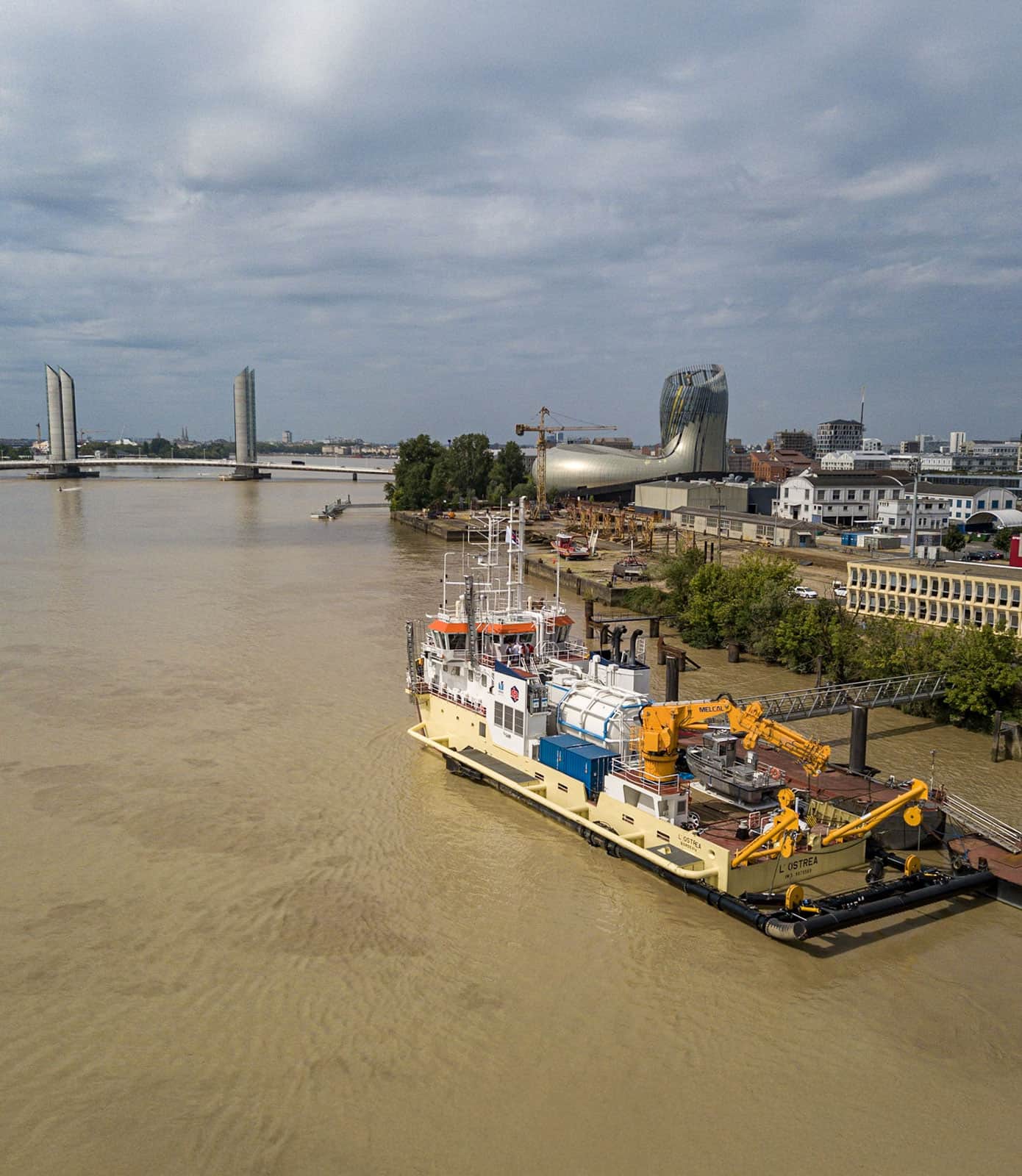
ESG COMMITMENTS
A voluntary approach
The main aim of the Corporate Sustainability Reporting Directive (CSRD, Directive (EU) 2022/2464 of December 14, 2022) is to harmonize corporate sustainability reporting and improve the availability and quality of published ESG (environmental, social and governance) data.
In drafting its 2026-2030 strategic plan, the GPMB voluntarily committed itself to this approach.
Based on a standardized process, the GPMB has defined 5 ESG commitments:
→ Decarbonizing maritime and port activities
→ Ensuring our port activities take account of limited resources
→ Applying a sustainable approach to port facilities and activities
→ Be an organization attentive to quality of life and working conditions
→ Assume a leading role in the port's businesses and missions of today and tomorrow
Decarbonizing maritime and port activities
A commitment at the heart of our 2026-2030 strategic plan
Reducing the carbon footprint and impact of our activities in a world in transition is no longer an option. The Port of Bordeaux is fully aware of this.
In the face of the climate and environmental emergency, we are taking action.
As part of our 2026-2030 strategic plan, we are making the ecological transition a priority.
The decarbonization and transformation of our maritime and port activities are part of this objective, in line with European directives and the expectations of our region.
To achieve this, we take action in three complementary areas: mitigation, adaptation and green energy production. This triptych guides all our decisions and is reflected in concrete projects in the field.
We have embarked on a structured process to reduce our greenhouse gas emissions.
Our efforts are focused both on our own facilities and on the port ecosystem as a whole.
Some concrete actions:
→ Modernize our practices: progressive electrification of equipment, energy optimization of buildings and technical facilities.
→ Enhance our natural spaces to capture CO₂ and move towards carbon neutrality.
→ Support local dynamics, in partnership with our current industrial partners and project developers.
→ Contribute to collective initiatives, for example by joining the Coopérative Carbone de La Rochelle to pool offsetting efforts.
By reducing our footprint, we are assuming our responsibility and taking concrete action to reduce the carbon footprint associated with our activities.
We know that the effects of climate change are no longer a matter of hypothesis. They are already visible, impacting our infrastructures, our operating rhythms and our immediate environment.
That's why adaptation is an integral part of our decarbonization strategy.
A vulnerability study has been updated to provide a clear picture of our exposure to climatic hazards.
It highlights several major risks:
→ Marine submersion, particularly in low-lying areas of the port domain, linked to storms and rising sea levels.
→ Prolonged heat waves, which affect the health of personnel, our activities and the durability of certain materials.
→ Clay shrinkage and swelling, a phenomenon that weakens infrastructures, buildings and roads.
→ The increased frequency of extreme events (storms, high winds) likely to disrupt port operations.
Based on this diagnosis, a first version of the GPMB's climate change adaptation plan was drawn up.
The actions defined are grouped into four categories:
→ Secure the port's operations, in line with its organization and procedures
→ Secure the port's assets by adapting them or implementing special monitoring measures as of now.
→ Use the harbor's natural spaces to support nature-based solutions (flood expansion, carbon sinks, etc.).
→ Raise awareness of the port ecosystem and pursue forward-looking approaches (use of the river's digital twins...).
As an industrial player with a significant land and property portfolio, we have the capacity - and the responsibility - to become a renewable energy producer or developer through competitive bidding.
Our actions include :
→ Our participation in the construction of an energy recovery center for business and territorial waste in the port area with the CVE project (operational in 2026).
→ The construction of a solar farm of around 40 MWp at Le Verdon, (project led by EDR Renouvelables and operational in 2028).
→ The construction of a heavy goods vehicle parking area in the port area, equipped with photovoltaic shades of around 3MWp (operational in 2027).
→ Calls for projects to equip our buildings with photovoltaic panels.
→ Our involvement in the development ofoffshore floating wind turbines, in conjunction with the other ports of New Aquitaine as part of the Aquitania Ports Link association. We are working with the ports of La Rochelle, Rochefort and Bayonne to propose, among other things, the Verdon terminal as a logistics base for float assembly.
This positioning not only reinforces our role as an industrial facilitator, but also helps to anchor a decarbonized economy in our region over the long term.
In this way, we're building a resilient, more autonomous energy model that creates value for the entire port industry.
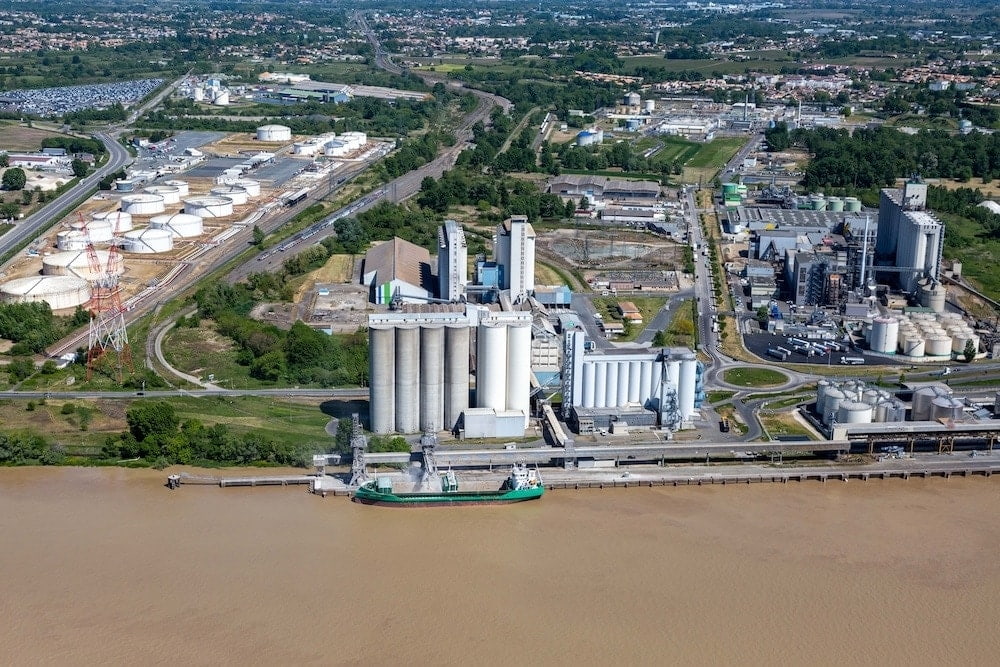
Ensuring our port activities take into account limited resources
In a world that is becoming aware of the limits of its resources, the Port of Bordeaux is taking concrete action.
Land, energy, water, materials: nothing is unlimited.
To continue to play our economic role while respecting environmental balance, we are changing our practices. Sobriety, reuse, optimization: we're making way for more refined, more responsible management.
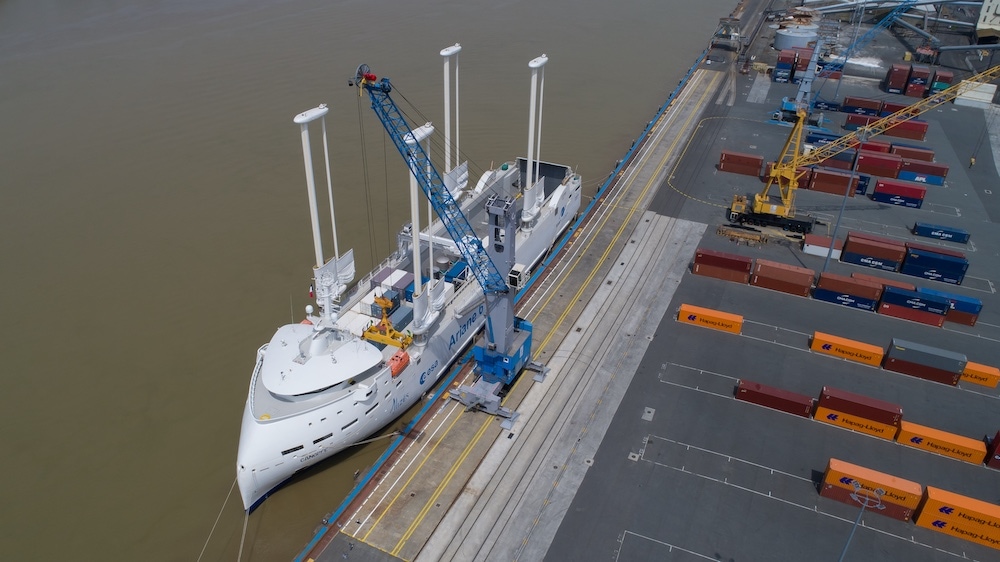
Port land, whose primary characteristic is to provide access to the sea, is a rare asset.
Every available plot of land must be put to the best possible use, limiting the artificialization of new land as much as possible.
This requires a sober development approach, giving priority to areas that are already developed and sometimes neglected.
The Bacalan site is a fine example of a strategic zone in the throes of transformation. The Port is hosting a start-up incubator in renovated buildings, and intends to develop facilities dedicated to the valorization of knowledge, the hosting of exceptional know-how and urban logistics to irrigate the city center.
A forward-looking, agile, intermodal vision. Solutions that enable us to do more and better... without expanding.
Where others see wasteland, we see potential!
Rehabilitate rather than build elsewhere.
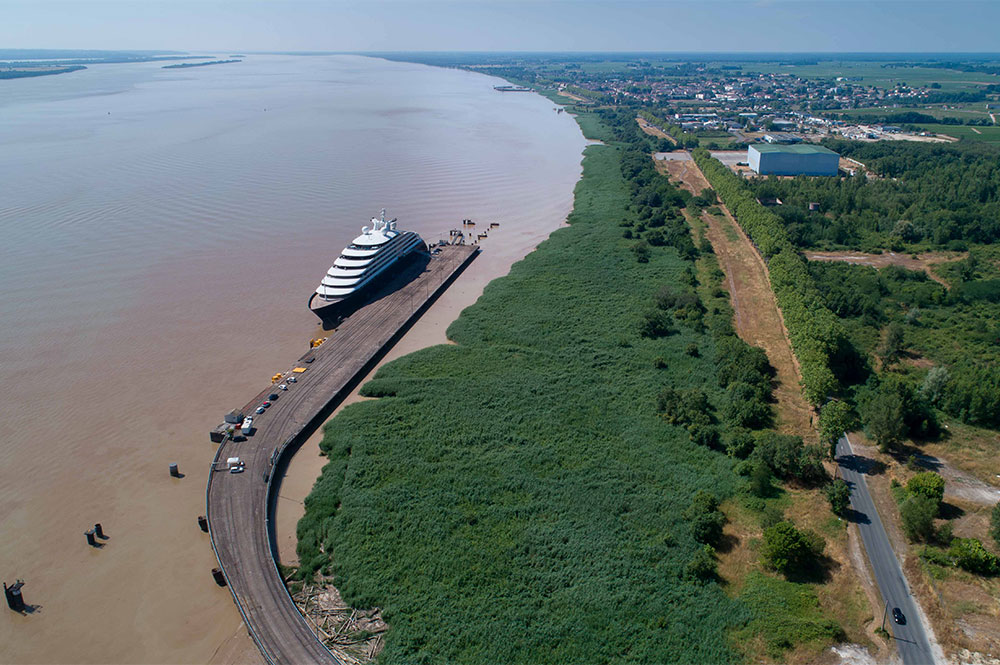
In Pauillac, for example, berth 700 - a former wharf dedicated to Airbus A380 logistics - has been upgraded to accommodate cruise activity. This judicious re-use avoids the need to build a new quay, while enhancing an existing site and planning for the future with a project to connect ships to the quayside.
These examples illustrate our credo: never start from a blank page, but build on what's already there wherever possible, with creativity and pragmatism.
In the same spirit of taking advantage of what already exists, we seek to extend the life of our equipment. Before replacing, we analyze, repair and transform.
Whether buildings, platforms or engineering structures, each piece of infrastructure is reviewed to assess its potential for reuse.
The upgrading of the Bacalan slipway is a perfect example. The slipway, whose origins date back to the 1950s, is now one of the most widely used pieces of equipment in our naval division, for the needs of navigation on the river!
Less materials, less expense, less impact: every project aims for efficiency without compromising the environment.
Towards a leaner, more agile and more sustainable model
This change is not limited to a few exemplary operations. It's part of a global transformation of the entire port ecosystem.
From now on, the development of our spaces is thought through the prism of land, energy and material sobriety.
The perpetual renewal and agility of our Bassens port site is a telling example. Only yesterday, it was home to coal and hydrocarbons, and today it is filled with a host of second-life materials from the recycling and bio-fuel industries.
It's another way of exercising our role as planners: with lucidity, while respecting resources and environmental balances.
Applying a sustainable approach to port facilities and activities
Here, we build, repair and transform. But now, we're doing it differently. By integrating the environment at every stage, rethinking the way we do things, and seeking a balance between activity and responsibility. This is the essence of the sustainable approach we apply to our port facilities.
In our shipyards, dismantling and repair operations are carried out with the utmost vigilance. Air quality, soil pollution, environmental protection: every risk is identified, monitored and controlled.
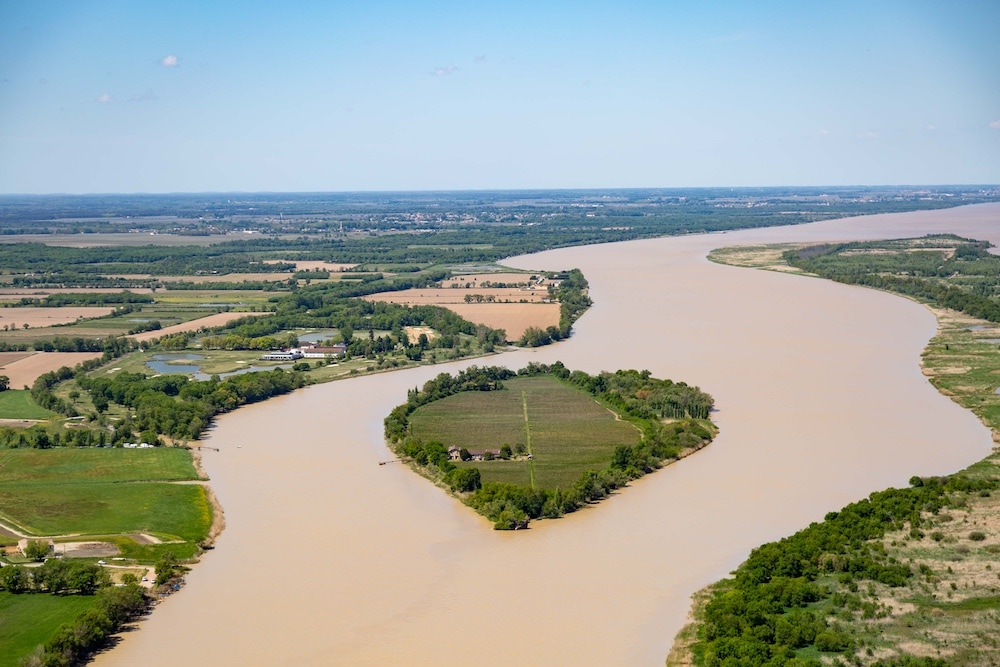 Limiting nuisance means respecting our immediate environment
The Port of Bordeaux operates in a complex ecosystem of users, customers, employees, local residents and partners. Noise pollution, odors, discharges, road traffic, etc. - the port's impact can be manifold. We take action to limit their effects, both upstream and downstream. Diagnostics are carried out, sensors installed and treatment systems implemented. And when an incident occurs, the causes are investigated and feedback is provided without delay.
Our aim is to set an example and prevent rather than treat. Progressing through dialogue and transparency is an integral part of our approach.
Avoid, reduce, compensate: a three-step logic
Beyond its regulatory nature for some of our developments, it's a rule we apply to every project: start by limiting the impact before even thinking about correcting it.
This simple but demanding logic guides our development choices today.
This means rethinking the location of projects, giving priority to areas that have already been developed, abandoned or rehabilitated.
Before using a new plot of land, we ask ourselves whether there is a more sober or less impactful alternative.
This approach prompts us to rethink our reflexes and explore new solutions, sometimes more complex, but also more virtuous. Building the port on the port is one of our fundamental reflexes.
When impact is unavoidable, we seek to limit it. This is achieved through the choice of materials, cleaner construction processes, improved wastewater management, appropriate construction schedules, noise reduction and pollutant capture systems.
Every detail counts, and every profession is involved.
Committing our ecosystem to the ecological transition is one of our major strategic priorities.
Where necessary, we implement ecological restoration or preservation actions.
This can take the form of facilities for protected species, replanting or measures to recreate wetlands or ecological corridors.
The idea is not to "compensate for the sake of it", but to make a concrete contribution to the balance of the territory and obtain an ecological gain, better environmental functionality within the framework of development projects.
Thinking of our environment as an asset to be preserved and enhanced enables us to rebuild our development approach on new, sustainable foundations.
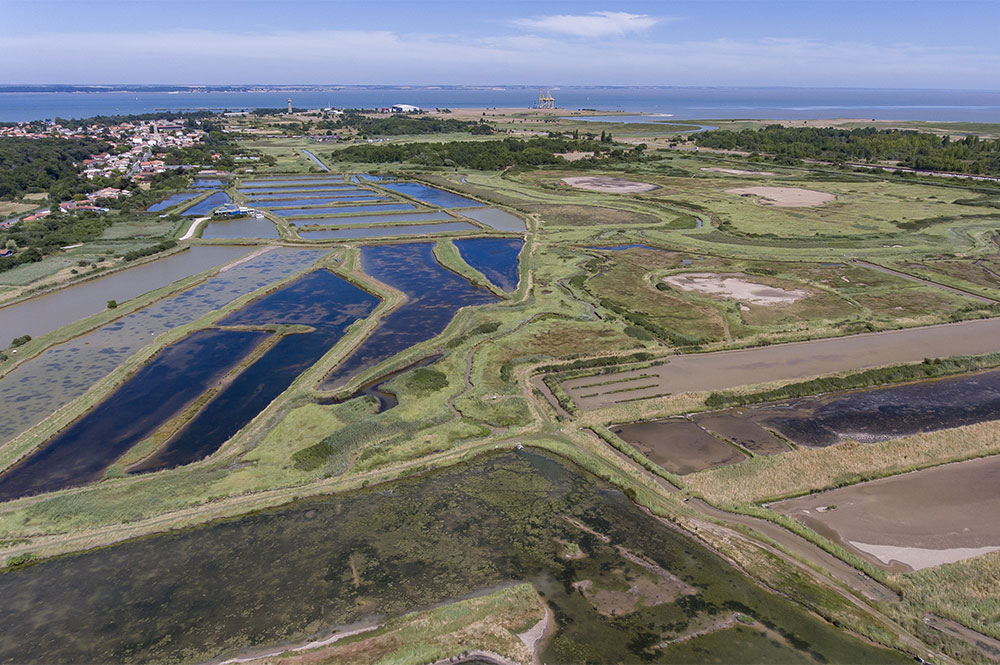
This triptych - avoid, reduce, compensate - marks a real evolution in our approach to port development.
Building "just" is becoming a rule of conduct for our developments.
Sober equipment designed for tomorrow
Building also means thinking ahead. Our new buildings are designed to last, to adapt and to consume little. Insulation, energy, water management, recyclability: environmental performance is becoming a central criterion.
Each new project is an opportunity: to innovate, to cooperate, to prove that another model is possible.
Making the port a responsible player in its region
We don't just comply with standards. We want to lead the way, with best practices. This involves not only concrete commitments, but also a shared corporate culture.
All our professions are involved, from the field to the offices, from the workshops to navigation. Acting with an awareness of our impact and keeping in line with our missions are part of this shared culture.
Sustainable action is first and foremost a question of consistency. And it is this consistency that, day after day, transforms our port, its employees and all stakeholders into committed players in the transition.
To be an organization attentive to quality of life and working conditions in the port environment.
At a port, activity never really stops. It constantly mobilizes men and women, under sometimes demanding conditions. In this context, protecting the quality of life and work must be a concrete, daily commitment.
At the Port of Bordeaux, we are convinced that a healthy, safe and respectful working environment benefits everyone: port employees, partner companies and local residents.
Because you can't build a sustainable port without taking care of the people who live there.
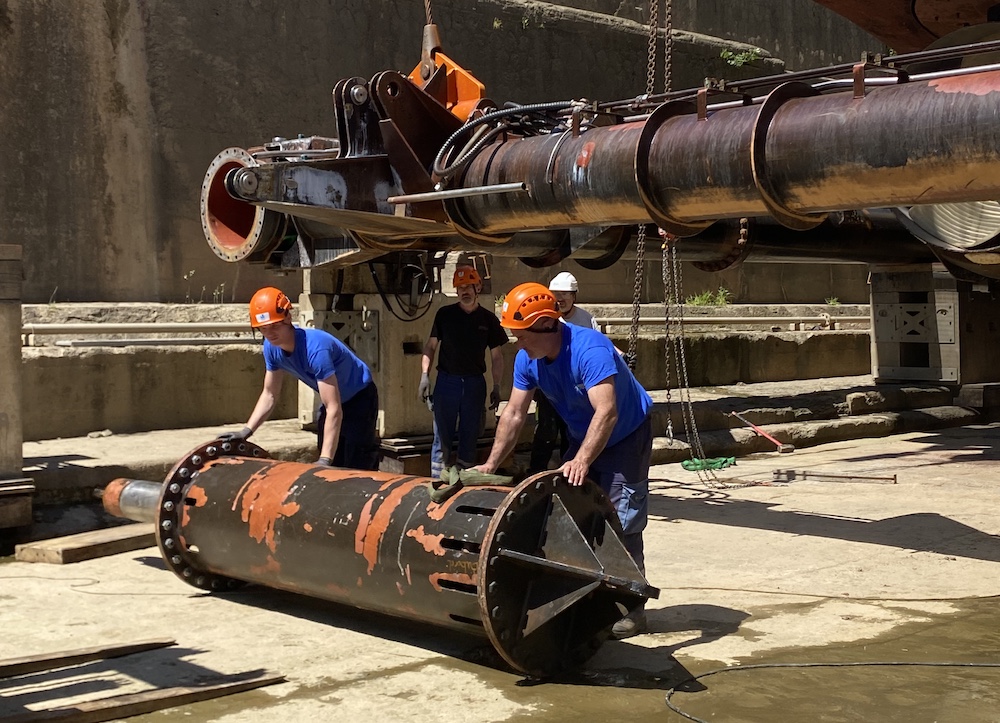
First and foremost, there's safety.
Working on a port site means evolving in a complex technical environment where machines, ships, trucks and personnel cohabit.
It's essential that risks are anticipated, instructions clearly understood and equipment adapted.
In addition to our regulatory obligations, we have for several years been running training sessions, drills, checkpoints and feedback sessions, supporting a culture of alertness and continuous improvement.
Our aim is clear: to reduce accidents and boost confidence in the port area.
Paying attention to working conditions also means ensuring human cohesion and the desire to work together.
We strive to create an environment where everyone can express themselves, be heard and find their place in the collective.
This involves developing in-house approaches to quality of life in the workplace:
・Preventing psychosocial risks
・Supporting professional transitions
・Dialogue with employee representatives
・Recognition of successes
・Friendly moments shared between teams.
The port is a place of exchanges, flows and movement.
We are aware of our responsibility towards those who live or work near our sites. It is our responsibility to limit nuisance to all our audiences.
That's why we take concrete action to explain what we do and reduce our impact:
・Noise monitoring at sensitive sites
・Air quality monitoring
・Adapting schedules for the most sensitive activities
・Landscaping and protection of flora and fauna
・Rational management of road traffic in conjunction with local authorities.
These actions are neither fixed nor exhaustive. They evolve in line with local needs, feedback from residents and elected representatives, and technical innovations.
Being a good neighbor means being attentive, attentive and responsive.
Listening, explaining, caring: that's how we see our relationship with the people who live in our port areas.
A port cannot live in isolation. It is intrinsically a symbol of exchange. It benefits from being open, legible and respectful of those around it.
For several years now, we've been setting up forums for dialogue: public meetings, site visits, consultation workshops and, more recently, a Port Center: Le Pavillon.
A variety of formats, so that everyone can have their say and feel included.
This human link is essential. It enables us to communicate our activities, projects and constraints.
But above all, it helps us to better understand local expectations and to adapt our practices in concrete ways.
A port that takes care of its immediate environment is a port that has a lasting place in its territory.
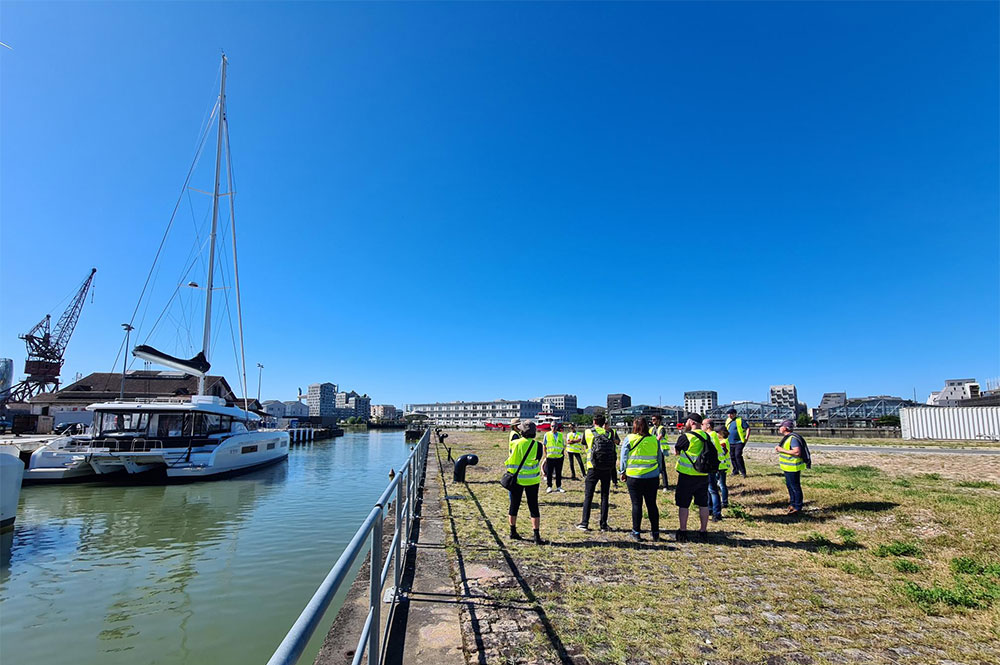
Assume a leading role in the port's businesses and missions of today and tomorrow
The Port of Bordeaux, through its skills and missions, mustfully assume its role as a driving force at the service of the region and the port ecosystem.
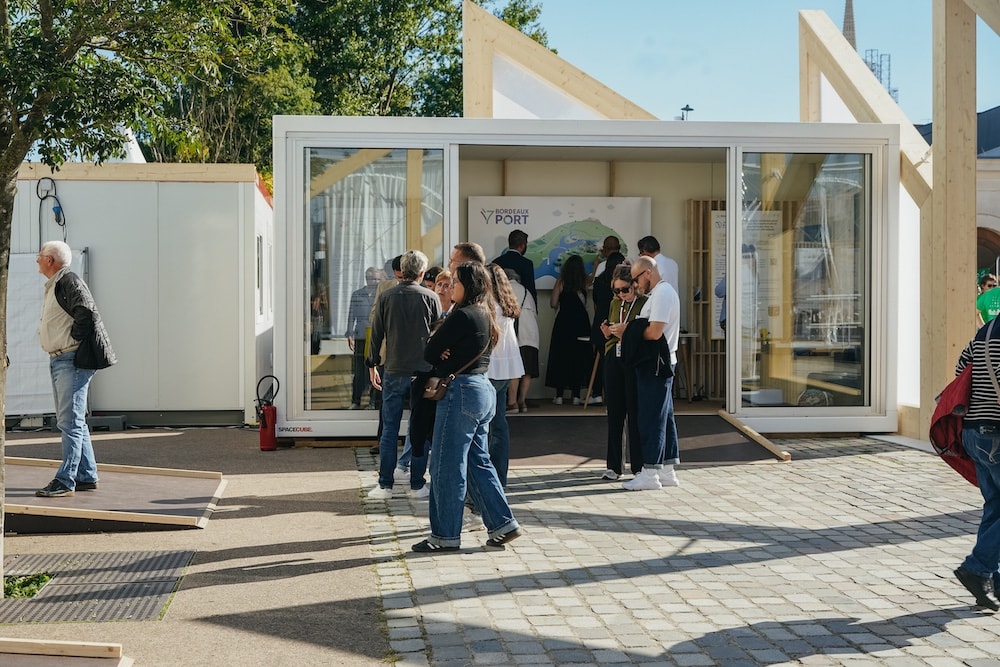
Our ambition → to draw all the economic and institutional players in our wake, by supporting projects :
・structuring: to boost the region's attractiveness
・durable: in step with major ecological and industrial transitions
・shared: built in conjunction with local authorities and users
・visibles: to promote know-how and develop the "port reflex".
Our method is designed to be open, clear-sighted and ambitious, always aligned with our core businesses and our public utility.
Our field of action is defined by regulations. It is within this framework that we deploy our skills to the full.
Where we are legitimate, we must assume a leading role:
・ on port land development
・ on channel maintenance and vessel reception
・on infrastructure operations
・ on support for port companies
・sur l'innovation au service de nos activités
This role is built, adapted and enriched over time, with method and respect for each person's role.
Don't try to do everything, but create the conditions for others to act and take over to go further.
Being a responsible port means being a driving force for the collective.
Play a catalytic role in local dynamics, by initiating initiatives and bringing together companies, local authorities and institutions.
This can take the form of support for innovative industrial projects, such as the establishment of activities linked to renewable energies, digital technology or biofuels.
Or active participation in regional and national governance bodies to ensure that the voice of sea and river stakeholders is heard.
When necessary, we are ready to initiate, finance or facilitate.
We are committed to playing a leading role in our field of expertise, and to applying our know-how to the full.
The initiative to create the Bees-ZIP association association for the decarbonization of the industrial port zone in 2024 is one of the strong symbols of this approach.
All too often, the port, its missions and its skills remain little-known.
Its businesses, tools and services are not very visible.
Our ambition is to ensure that every question relating to transport, logistics, production, development or energy becomes a "port" answer.
→ Do you need to transport goods?
→ Do you have a damaged crane or a ship in need of repair?
→ Looking for a space to convert?
→ Are you developing a low-carbon project, a digital solution or a high value-added service in the region?
Think Port of Bordeaux.
Creating this reflex not only enhances the value of our expertise, but also raises awareness of our role in promoting sustainable regional development.
Creating this reflex also means removing obstacles, changing perceptions and making the port visible, legible and attractive.
This means charting a credible, clear and shared course, consistent with our missions and commitments.
We have the tools, the know-how and the local roots to drive this transformation.
This is the stance we cultivate: a port that enlightens, connects and acts, while respecting its responsibilities. That's why the port has voluntarily committed to taking its impacts into account when implementing its strategy, through the CSRD approach, in application of European Directive (EU) 2022/2464 and its implementation in French law.
A forward-looking port that makes transition a lever for collective development.