MULTIMODALITY
The Port of Bordeaux is characterized by its extensive coverage of the Gironde region, with 7 port terminals located along the estuary, serving many of the region's towns and cities.
These inland infrastructures enable goods to be transported by sea as close as possible to industrial zones and consumer centres.
Bordeaux's port terminals now have rail and road connections as close as possible to the quayside areas. Bordeaux Port also supports the development of new modal shift services to optimize existing solutions, via virtuous modes of transport.
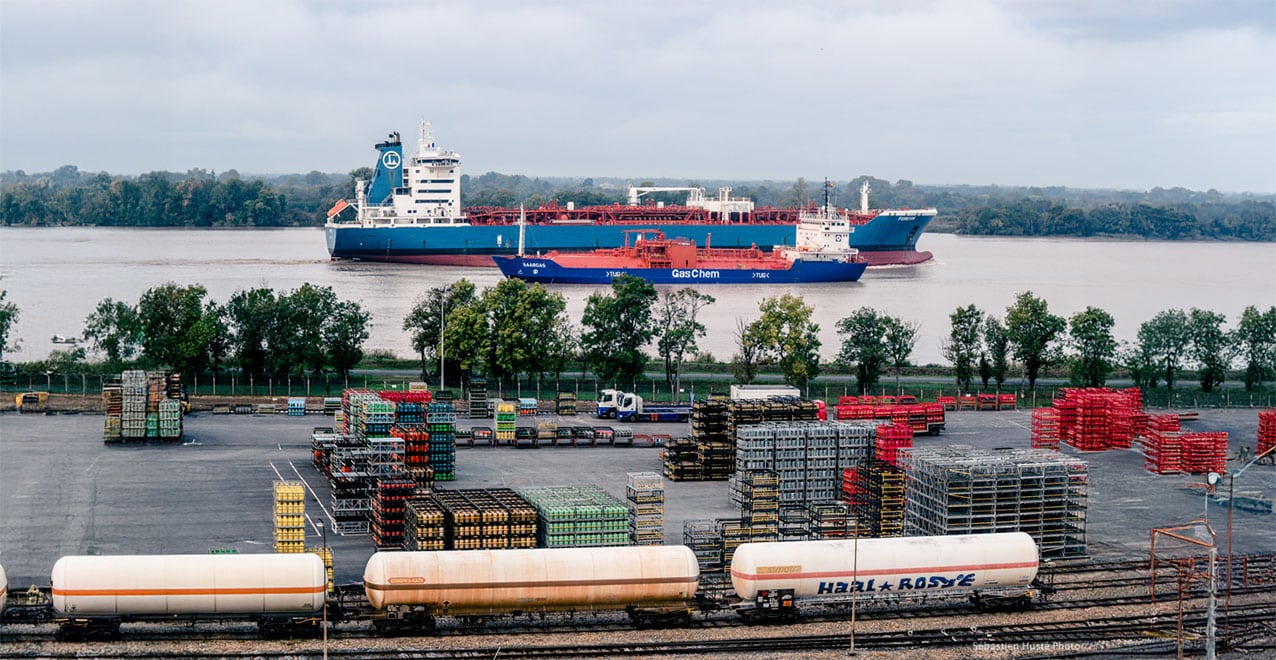
Since 2021, the Bordeaux Port Authority has developed the use of rail from its terminals, participated in the reactivation of saddled terminal facilities at operators in the industrial zone, and taken part in several experiments to revive river freight between Damazan (Garonne canal) and its multivac terminal in Bassens, with loading/unloading operations geared towards the economy. in several experiments to revive river freight between Damazan (Garonne canal) and its multivessel terminal in Bassens, with loading/unloading operations geared towards the circular economy.

A UNIQUE LOCAL LOGISTICS FORCE
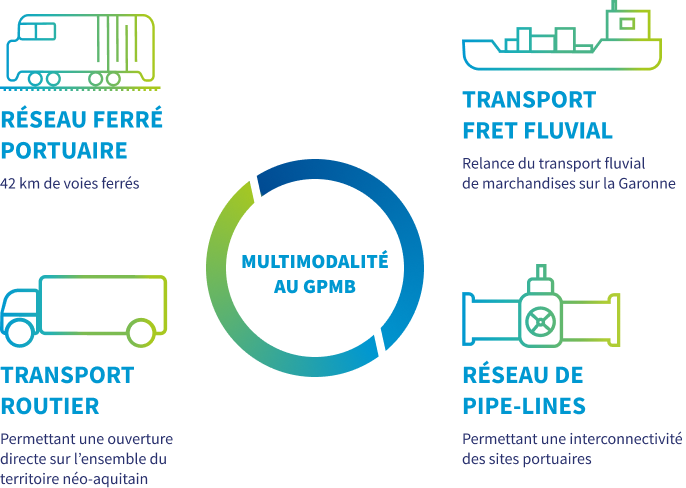
Bordeaux Port Authority terminals are interconnected with :
 an extensive network of pipelines,
a port rail network of over 42 km, enabling pre-post shipment logistics
"0 trucks",
direct access to the river.
THE PORT, A VERSATILE
TO SERVE THE REGION
At the gateway to the capital of Aquitaine, the port of Bordeaux is the focal point of a dense, multimodal communications network.
Investing in the renovation and modernization of rail access to its terminals, the Bordeaux Port Authority aims to triple its modal transfer capacity by developing its rail/road/river bulk and container transshipment capacities.
IN 2024
・18.3% of goods transported to the Port of Bordeaux were used directly by industries in the port area, i.e. consumed directly on site (i.e. 1 tonne out of 5 transiting the GPMB).
Rail traffic on Port of Bordeaux sites:
・Rail freight generated by port industries in the Bassens-Ambes area amounts to 891,793 tonnes, including 461,883 tonnes of pre- or post-carriage (representing 9% of routable traffic).
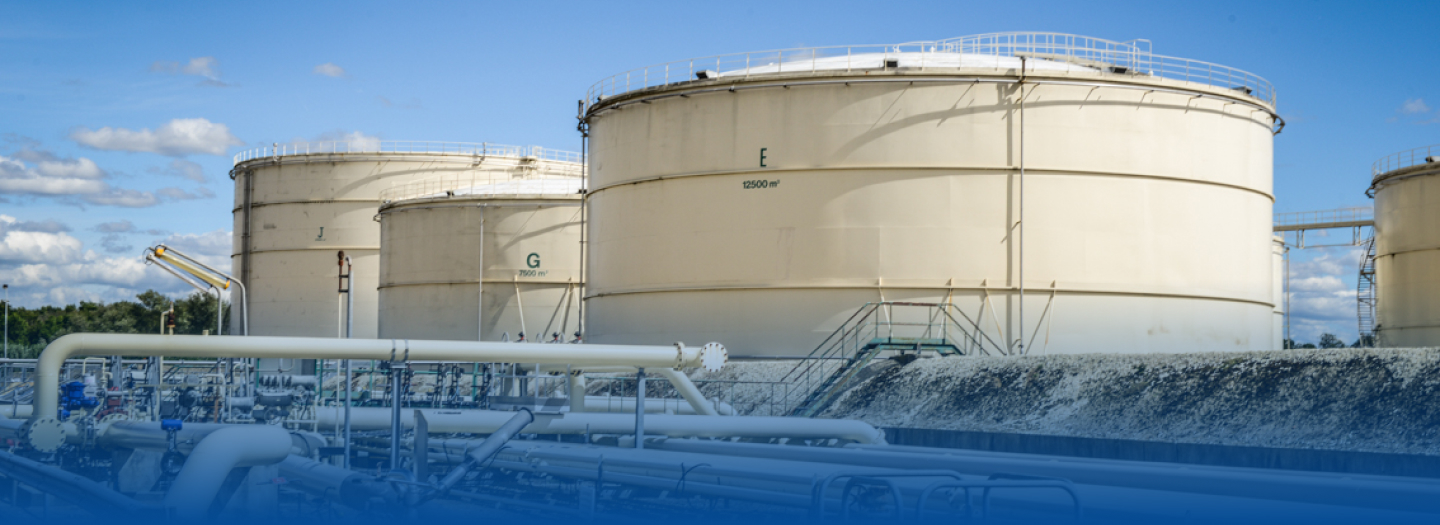
OVER 300 PORTS WORLDWIDE SERVED WEEKLY FROM 7 PORT TERMINALS
The port's entire rail network of some forty kilometers is suitable for D loads (22.5 tons per axle), and features long loading and unloading tracks, ideal for modal transfers and light maintenance operations (including fueling).
To support the development of pre- and post-carriage rail traffic, the Port of Bordeaux is working on capacity solutions to obtain freight train paths from SNCF Réseau.
The entire network meets the safety requirements of the decree of March 30, 2017 "relating to the safety of rail traffic on certain local railroads supporting freight transport". The operating network has been largely modernized to ensure day-to-day operational availability.
The conditions of access to the PPN can be found in the Bordeaux Port Rail Network reference document, available below:
Consulter le document de Référence du Réseau Ferré du Port de Bordeaux (MAJ 2026.)
River transport is an environmentally-friendly mode of transport, and remains a major area of development for the Port of Bordeaux, alongside the railways.
The Port of Bordeaux is the only commercial port in New Aquitaine to be connected to the river.
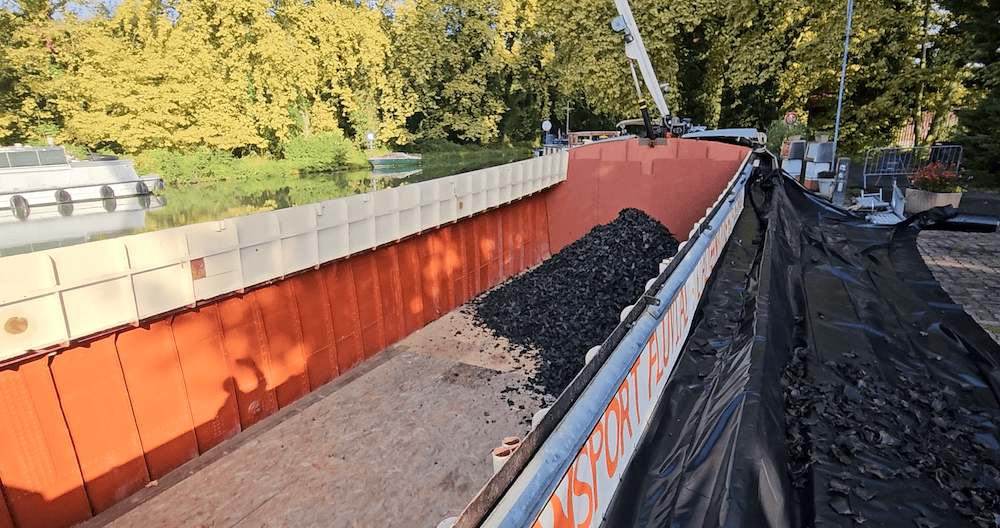
With the aim of reviving this mode of transport, an experiment was carried out in September 2024: the barge La Tourmente transported a load of tire shreds on the Garonne between the town of Damazan and Bassens, before reloading with wood waste for its return journey.
This crossing follows a technical and financial feasibility study for river freight on the Garonne, launched in 2021, supported by the Confluent and Coteaux de Prayssas community of communes.
The project continues alongside regional public and private partners such as the Damazan town council, local manufacturers and VNF.
Characterized by a high degree of flexibility, road transport accounts for the bulk of pre/post shipments to and from the Port of Bordeaux.
The port's stakeholders work closely together to improve the quality of road and last-mile services in the Port of Bordeaux's hinterland every year: improving access to the Bassens site is a priority.
The forthcoming construction of a large truck parking area is further proof of this commitment. This new facility (170 secure spaces, equipped with photovoltaic shading systems, on avenue de l'Industrie in Bassens) will optimize port logistics while reinforcing the terminal's renewable energy production.