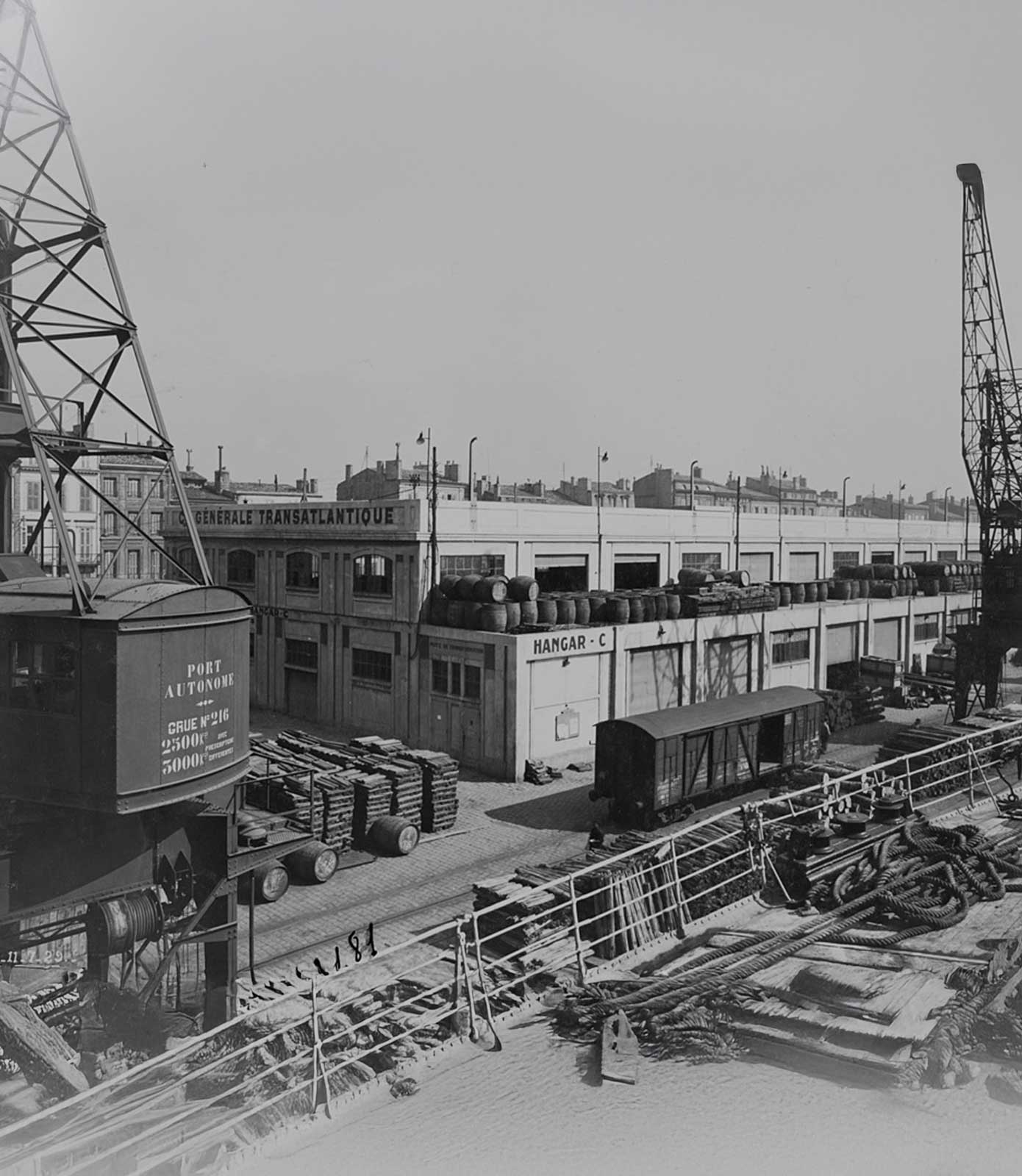
BORDEAUX,
ITS CITY, ITS PORT,
A HISTORY OF EXCHANGES
A LITTLE HISTORY
The Port of Bordeaux is an ancient estuary port, located at the crossroads of land, river and sea routes. As early as 300 B.C., the Bituriges Vivisques, descendants of the Celtic peoples who moved south, were attracted by its location and settled here.
Bordeaux, an active center of maritime traffic, was already famous at the time: metals, wine, oil, copper and pottery passed through its port, the outlet for the Mediterranean-Atlantic axis.
The origins of the city
Unable to withstand the Germanic and Norman invasions that followed, the port's activity weakened considerably, and then remained very limited until the marriage of Eleanor of Aquitaine and Henry Plantagenet in 1152.
This union linked Aquitaine to the English crown. Close shipping links were established with the British Isles and Nordic countries, with Bordeaux exporting wines and England importing linen and wheat. This period of prosperity came to an end for Bordeaux and its port in the mid-15th century following the French Reconquest, which weakened the port and the wine trade. It wasn't until the 17th century that the port was revived by the Guyenne Chamber of Commerce.
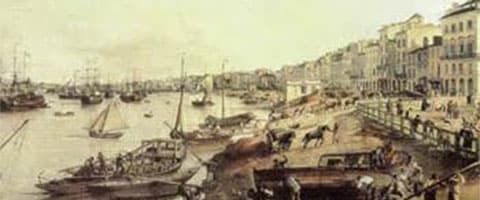
The real development of the town and its port came with the growth of the merchant fleet and increased trade with the islands.
Colonial trade considerably strengthened the role of the port of Bordeaux, which became the second largest slave port after Nantes, with 419 slave shipments.
Shipowners engaged in triangular or "straight" trade with the West Indies, exchanging regional commodities (such as wine) for colonial products. *
Bordeaux supplied a large part of Europe with coffee, cocoa, sugar, cotton and indigo, becoming France's leading port and the world's second largest after London.
Under the reign of Louis XVI, regular shipping lines to North America, Bourbon Island and the West Indies were set up, and Bordeaux, which still benefited from the wine trade, accounted for a quarter of national trade.
After the wars of the Revolution and Empire, which caused the port to turn in on itself, trading revitalized the port's activity, with a focus on new overseas horizons.
The signing of a Franco-English free-trade treaty in 1860 boosted the vitality of the port of Bordeaux. Wine exports quadrupled, new lines were created and the list of imported and exported products grew.
The colonial conquests of the Third Republic also boosted the port's activity.
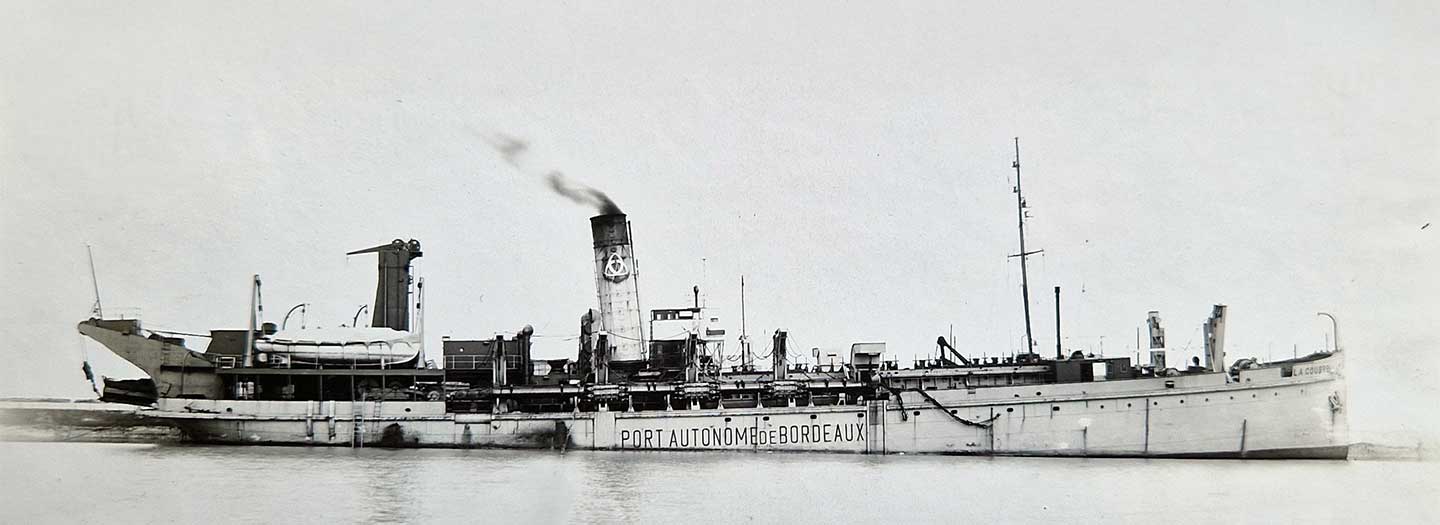
BORDEAUX, A CROSSROADS
During the 20th century, work began on modernizing the port's facilities to accommodate new vessels.
century: construction of vertical quays, development of the channel and installation of an outer harbor. During
First World War, the port's sites were used as military bases.
Between 1939 and 1945, commercial traffic declined in favor of imports for the war industry.
Under the Occupation, Bordeaux became a strategic military port, moving further away from its commercial vocation.
the German army decided to build a submarine base (located in the Bassins à flot).
Shortly before liberation, Henri Salmide, a young German soldier who was to carry out the plan to blow up the port's infrastructure, refuses to obey.
saving thousands of lives and preventing the destruction of the port facilities and
Bordeaux's quays. Today, the Bordeaux Port Atlantique head office, inaugurated in February 2012, bears his name.
After the war, reconstruction began. New port sites were opened, and others were developed
Aquitaine, along the estuary. With competition becoming increasingly fierce, the Port of Bordeaux
specializes its facilities, opening the Verdon container terminal in 1976.
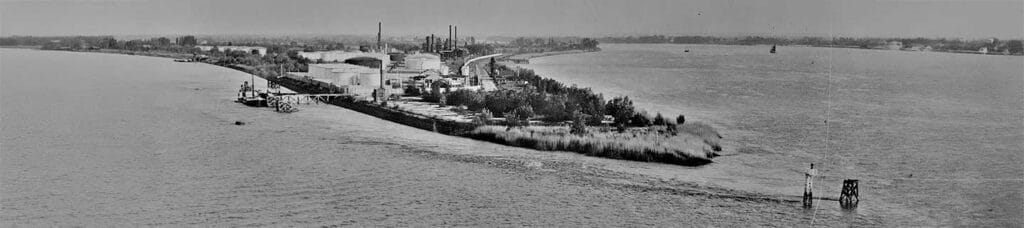

...UNTIL TODAY
Today, the Port of Bordeaux has 7 specialized terminals (Le Verdon, Pauillac, Blaye, Ambès, Parempuyre, Bassens, Bordeaux) continues to be present in a wide range of trades, including cereals, oilseeds, timber, livestock feed, paper, refined petroleum products, ores and containers. It currently handles six to seven million tonnes of goods a year, the equivalent of 350,000 trucks.
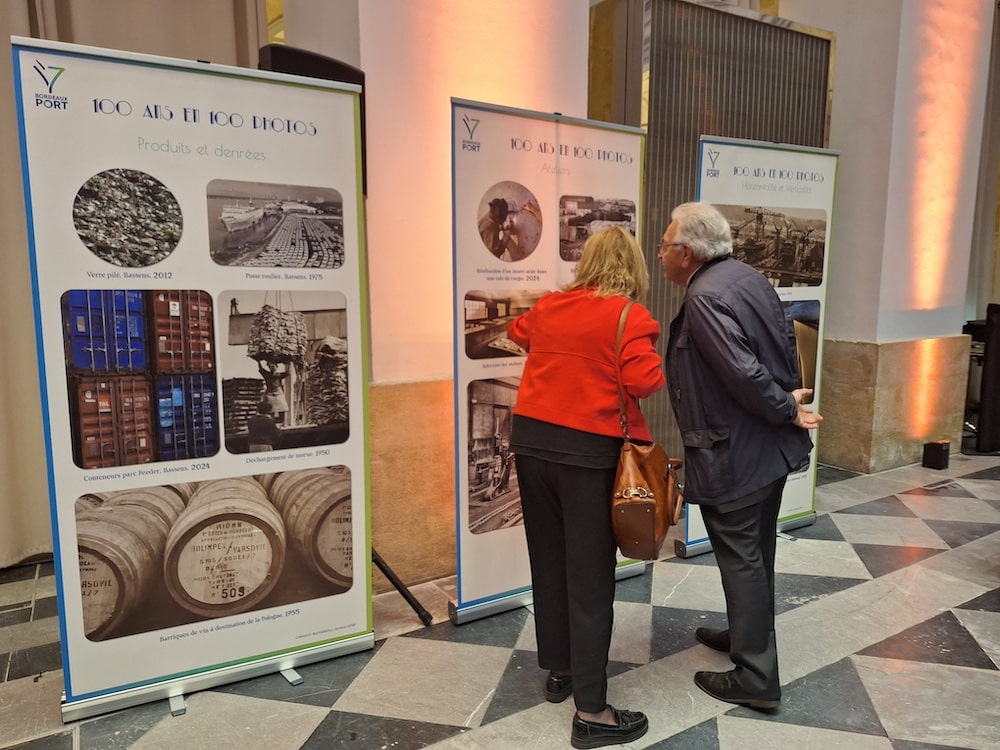
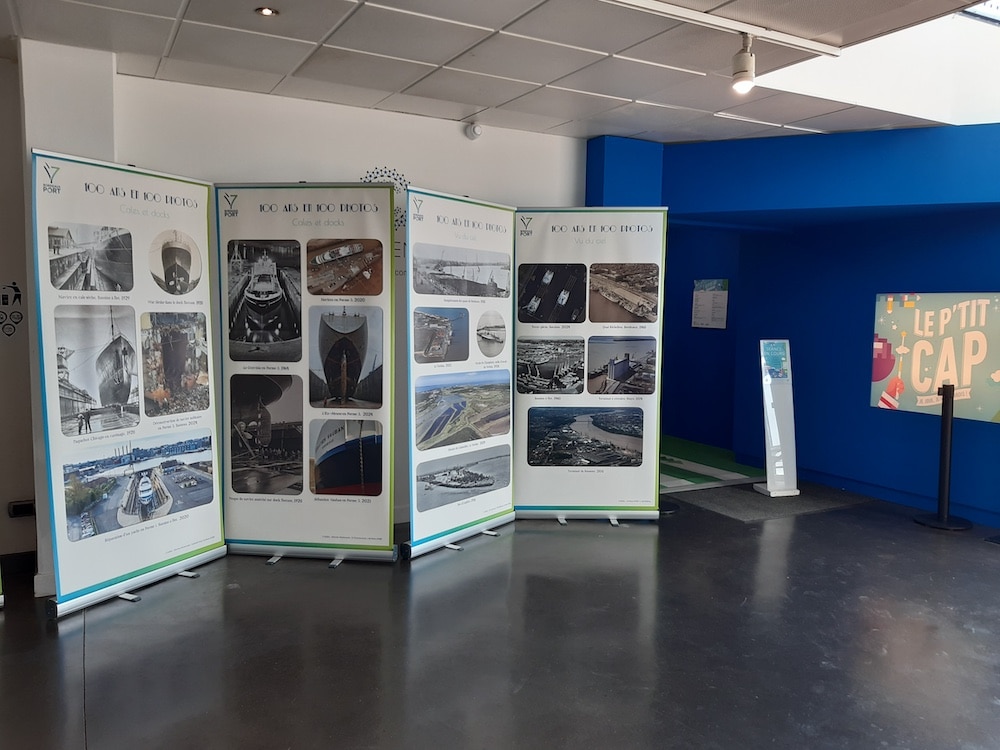
The "Port of Bordeaux: 100 years in 100 photos" exhibition.
In 2024, 100 years after the signing of the decree establishing the Port of Bordeaux's "autonomous regime", the company has decided to celebrate this centenary with an exhibition of 100 photographs from its rich archive.
The "Port de Bordeaux: 100 ans en 100 photos" exhibition features the Port de la Lune under snow in 1954, a minesweeper in 1946, whose role was to secure shipping in the aftermath of World War2, and more contemporary shots of the port, with its dredgers and new equipment.
* The Port of Bordeaux is working with local authorities to create a place dedicated to the memory of slavery and the fight against it.
Rights reserved - Credit Archives Bordeaux Port Authority.